
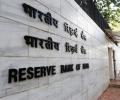
Those hardest hit by the second wave of the pandemic have been blue-collared workers, doctors and healthcare workers, law and order and municipal personnel, individuals eking out daily livelihood, and small businesses. And there should be more measures taken to alleviate their pain, the Reserve Bank of India (RBI) said on Monday. The report also indicated that the RBI's growth numbers might have to be revisited as the central bank's real GDP growth projection of 26.2 per cent given in the MPC's resolution of April 7 for the first quarter of 2021-22, were "made before the full fury of the resurgence." Nevertheless, the "resurgence of COVID-19 has dented but not debilitated economic activity in the first half of Q1: 2021-22.

While retaining its forecast for inflation at five per cent this fiscal, RBI has lowered its objective of inflation to three per cent in the "medium term" against 4-4.5 per cent as announced in the last quarterly review in July. "So far as prices are concerned, inflationary development is on track. We expect inflation will end at the level of five per cent, subject to the caveat that oil prices are ruling high and a pass-through may occur," RBI Governor Y V Reddy said.

Rajan said an interest rate cut won't by itself lead to higher economic growth

The decision in this regard, however, is expected to be taken by the new government.
Inflation declined to 0.26 per cent, the lowest ever in more than three decades, for the week ended March 28 mainly on account of food items and mineral products, fuelling expectations of rate cuts by the Reserve Bank.

The Reserve Bank may raise key policy rates by up to 50 basis points in its July 27 monetary policy review to check double-digit inflation, said a member of the Prime Minister's Economic Advisory Council.

If indeed we want the board to manage the RBI, probably the government should take a close look at the US Federal Reserve system which has a two-part structure - a central authority in Washington, DC, and a decentralised network of 12 Federal Reserve Banks located throughout the country, says Tamal Bandyopadhyay.

Indian start-ups breathed a sigh of relief after the UK government facilitated the acquisition of the now-defunct Silicon Valley Bank's (SVB's) British arm by HSBC. In a bid to allay fears, the US Federal Deposit Insurance Corporation (FIDC) announced recently that it had transferred all deposits of start-up-focused SVB to a newly created bridge bank and all depositors would have access to their money. President Joe Biden also sought to reassure jittery depositors that they can have confidence that the US banking system is "safe".

Inflation has remained a major concern.

Asserting that retail inflation excluding food and fuel is still at an elevated level, the Reserve Bank of India on Tuesday said it would endeavour to curb price increases.

The Bharatiya Janata Party regime will have to make good on this election slogan to restore state-owned banks to health, says Rajiv Lall.
The Reserve Bank's tight monetary policy is likely to moderate the growth rate of Indian economy in the second half of the current calendar year, the economic analysis arm of international rating agency Moody's has said.
.jpg)
As per the latest data, India's CAD sharply narrowed to 1.7 per cent of the gross domestic product or $32.4 billion in 2013-14 from a record high of 4.7 per cent in FY'13.

With over Rs 15,000 crore in deposits, its strategy is a hit for now, but the real test will come when it starts lending to retail and corporate customers in a big way

The company was awaiting clarification from the Reserve Bank of India on data storage before it took a final call on data localisation.

India's manufacturing sector activities moderated in August, as business orders and production rose at softer rates due to the pandemic and rising input costs, a monthly survey said on Wednesday. The seasonally adjusted IHS Markit India Manufacturing Purchasing Managers' Index (PMI) stood at 52.3 in August, down from 55.3 in July, indicating a softer rate of growth that was subdued and below its long-run average. The August PMI data pointed to an improvement in overall operating conditions for the second straight month.

The 6-member Monetary Policy Committee, headed by Reserve Bank of India Governor Urjit Patel, in its fifth bi-monthly review, kept the repo rate unchanged at 6 per cent and reverse repo at 5.75 per cent.

'Higher than expected inflation in the US or the European Union, faster than expected tightening by the major central banks, break out of a war in Europe, and withdrawal of portfolio equities from the emerging markets are factors which can result in equity market corrections.'

This follows a staggering inflow of Rs 19,967 cr in equities and debt last month

Reflecting a loss of "growth momentum", manufacturing activities in the country slowed down to a six-month low in March amid softer increases in new orders, production and employment, according to a survey.
Ahead of the slack season Credit Policy, Reserve Bank Governor Y V Reddy on Monday met Finance Minister P Chidambaram amidst expectation of monetary measures to contain prices and keep interest rates stable to sustain high economic growth.

Come October 1, merchants, payment aggregators and acquiring banks can no longer store the card details of customers.

India's manufacturing sector activities witnessed the strongest rate of growth in three months in July amid improved demand conditions and easing of some local COVID-19 restrictions, a monthly survey said on Monday. The seasonally adjusted IHS Markit India Manufacturing Purchasing Managers' Index (PMI) rose from 48.1 in June to 55.3 in July, pointing to the strongest rate of growth in three months. In PMI parlance, a print above 50 means expansion while a score below 50 denotes contraction.
.jpg)
The rate cut, the industry chambers argued, could have given a positive signal to the manufacturing sector, which is undergoing difficult times.

Industrial countries cannot at this point wash their hands off developing economises and say we will do what we need to, and you do the adjustment you need to, says RBI Governor.

Bankers said high interest rate could make Indian economy sluggish given that inflation is around 5%

'We want to send Indians on the moon and create history, but we don't want to accept the reality that is happening on earth.'
The central bank's next monetary policy review is scheduled for April 5. It had kept the policy rate unchanged in its February meeting on fears of inflation.

The cost of holding one-year forward dollars rose to 482.75 basis points from 472.75 bps on Tuesday.

On February 22, 2013, the Reserve Bank of India issued guidelines on 'Licensing of New Banks in the Private Sector'.
India's real gross GDP grew by 7.4 per cent year-on-year in the second quarter of 2004 and the rupee depreciated by less than 1 per cent in the first half of the same, the US treasury department has said in a report.

The announcement of the formation of the BRICS bank will have as much an impact about how the non-G7 countries manage their economies and their foreign reserves, as it does on the intellectual discourse. The development priorities and agenda which was hitherto set by western experts responding mostly to western priorities and notions will now have to compete with an intellectual tradition that is and can be very different, says Mohan Guruswamy.

The number of public holidays varies from 14 in Delhi to 34 in Odisha.

According to Japanese financial services major Nomura, despite slowing external demand, the domestic growth cycle is improving.
The policies of the UPA government and Reserve Bank in the last 15 months have paid off, with inflation falling to a new low of 3.13 per cent.

New projects fell 6.3 per cent in the December quarter compared with the September quarter. The value of new projects in the just-concluded quarter was Rs 2.1 trillion, according to the data from Centre for Monitoring Indian Economy (CMIE), which was lower than the Rs 2.2 trillion seen in the September quarter. It is, however, higher than Rs 1.5 trillion recorded for the quarter ended December 2020, the first year of the Covid-19 pandemic. This data ties in with the November data for core sector growth, an index of eight core industries, which grew at its slowest pace since early 2021.

Every 10 per cent rise in crude oil price will shave off around 0.2 percentage point (pp) from India's GDP growth and widen the current account by 0.3 per cent, says Nomura.
Reserve Bank of India has said new project finance and corporate investment are likely to fall this year, despite growth buoyancy in manufacturing and services during July-September.
 © 2026 Rediff.com - Advertise with us - Disclaimer - Privacy Policy - Sitemap - Feedback - About us - Terms of use - Grievances